The Regional Maritime University (RMU) on Tuesday, November 3, 2026, received a delegation from Maersk Shipping Line, a global integrated shipping and logistics company, to explore areas of collaboration and support towards the university’s growth and development.
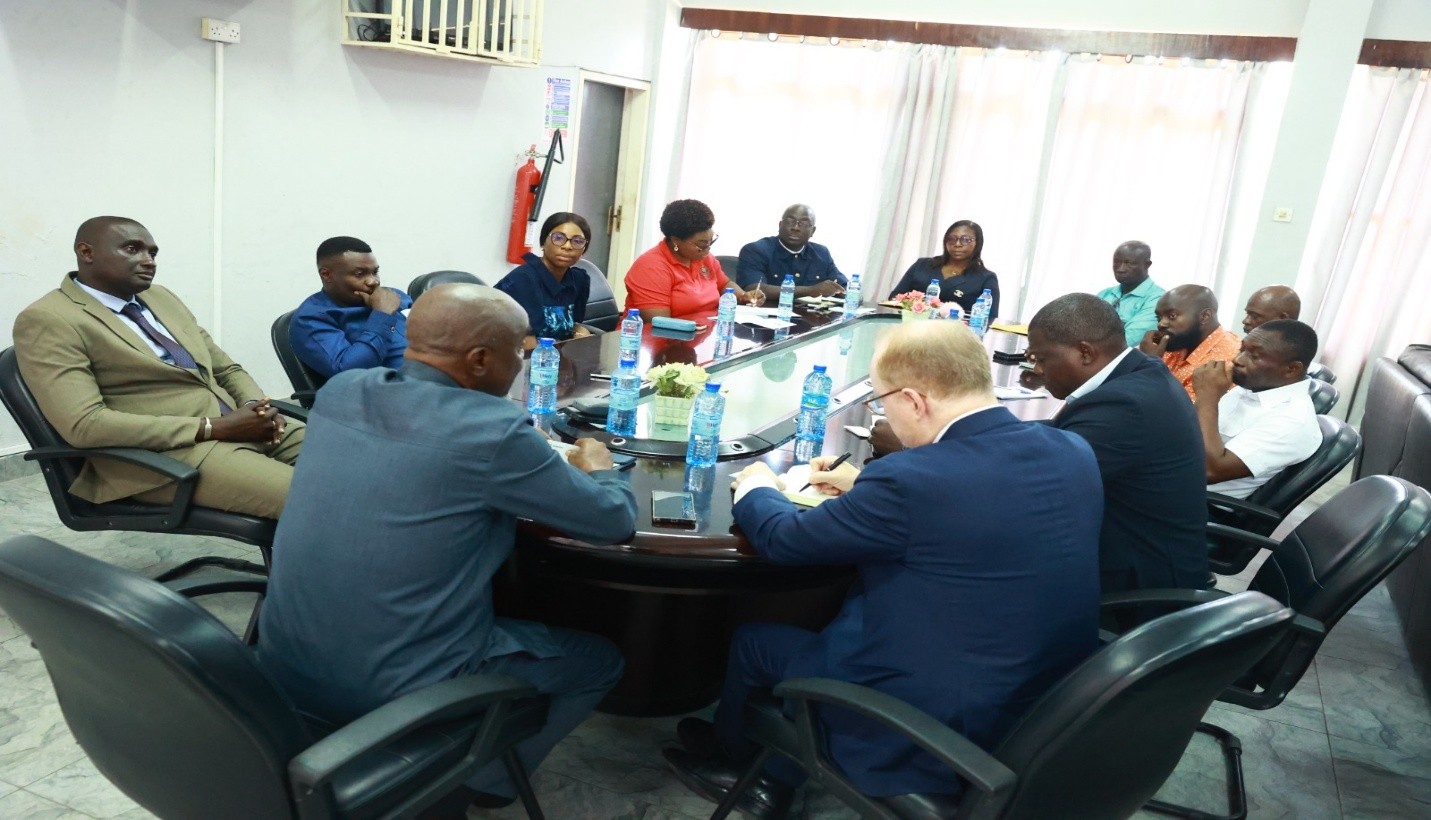
Maersk officials and RMU with the RMU delegation
Discussions centred on potential support in key areas, including student accommodation, the provision of a full-mission bridge simulator, and capacity-building initiatives to strengthen the university’s training programmes in line with the evolving demands of the maritime industry.
The Ag. Vice Chancellor of RMU, Dr Jethro W. Brooks Jr., who welcomed the two-member Maersk delegation on behalf of Management, expressed appreciation for the visit. The delegation comprised Mr John T. Godfred, Chief Group Representative – Africa, Global Public and Regulatory Affairs, Maersk, and Mr Razak Ngula, Managing Director of Maersk Ghana Limited.
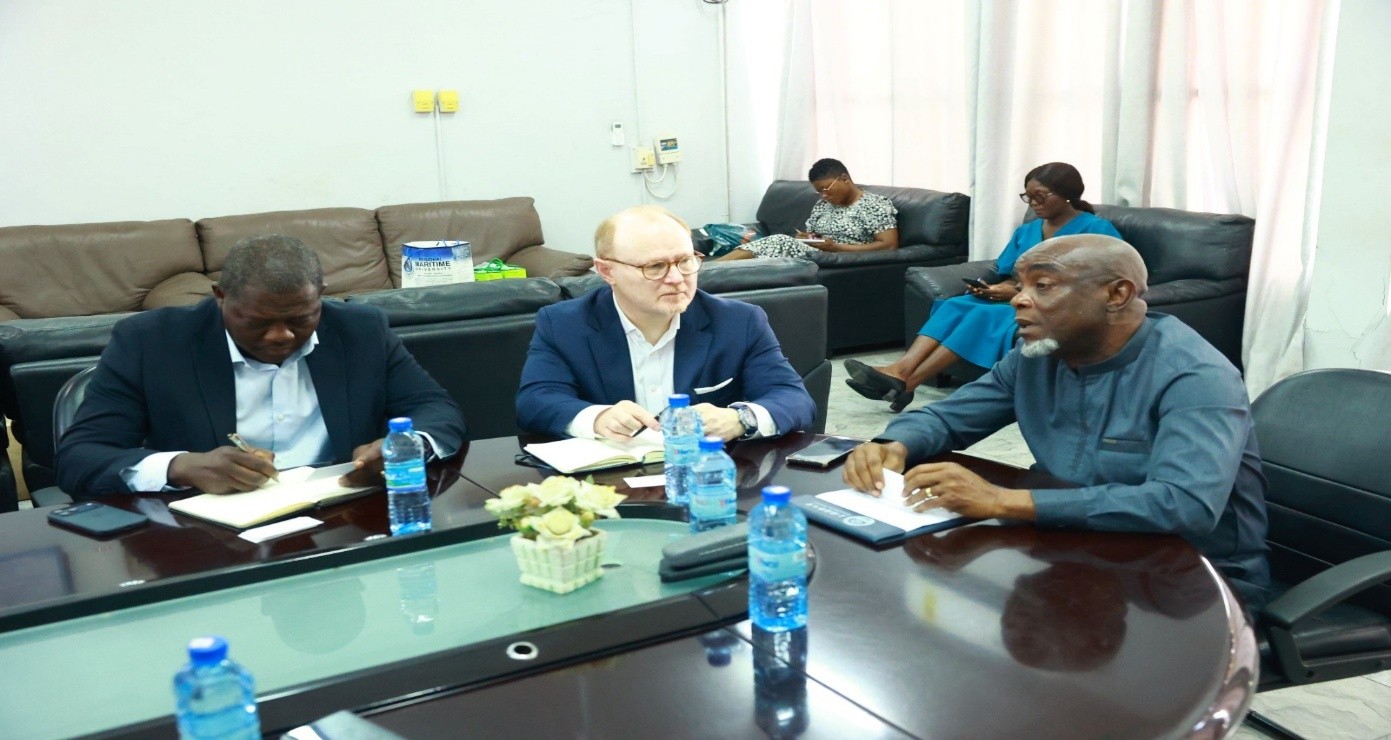
Dr Brooks in discussions with the Maersk delegation (right)
Dr Brooks described the meeting as timely, emphasising the university’s commitment to building mutually beneficial partnerships with industry players such as Maersk to advance maritime education and training.
He noted that the maritime industry was evolving rapidly, driven by developments in decarbonisation, digitalisation and other emerging technologies, as well as changes in the Standards of Training, Certification and Watchkeeping (STCW) requirements. He said these developments placed increasing expectations on maritime education and training institutions to adapt their programmes to meet the changing needs of shipowners and other industry stakeholders.
He explained that although RMU continued to make efforts to align its training programmes with current industry trends, inadequate funding remained a major challenge, particularly as student enrolment continued to increase.
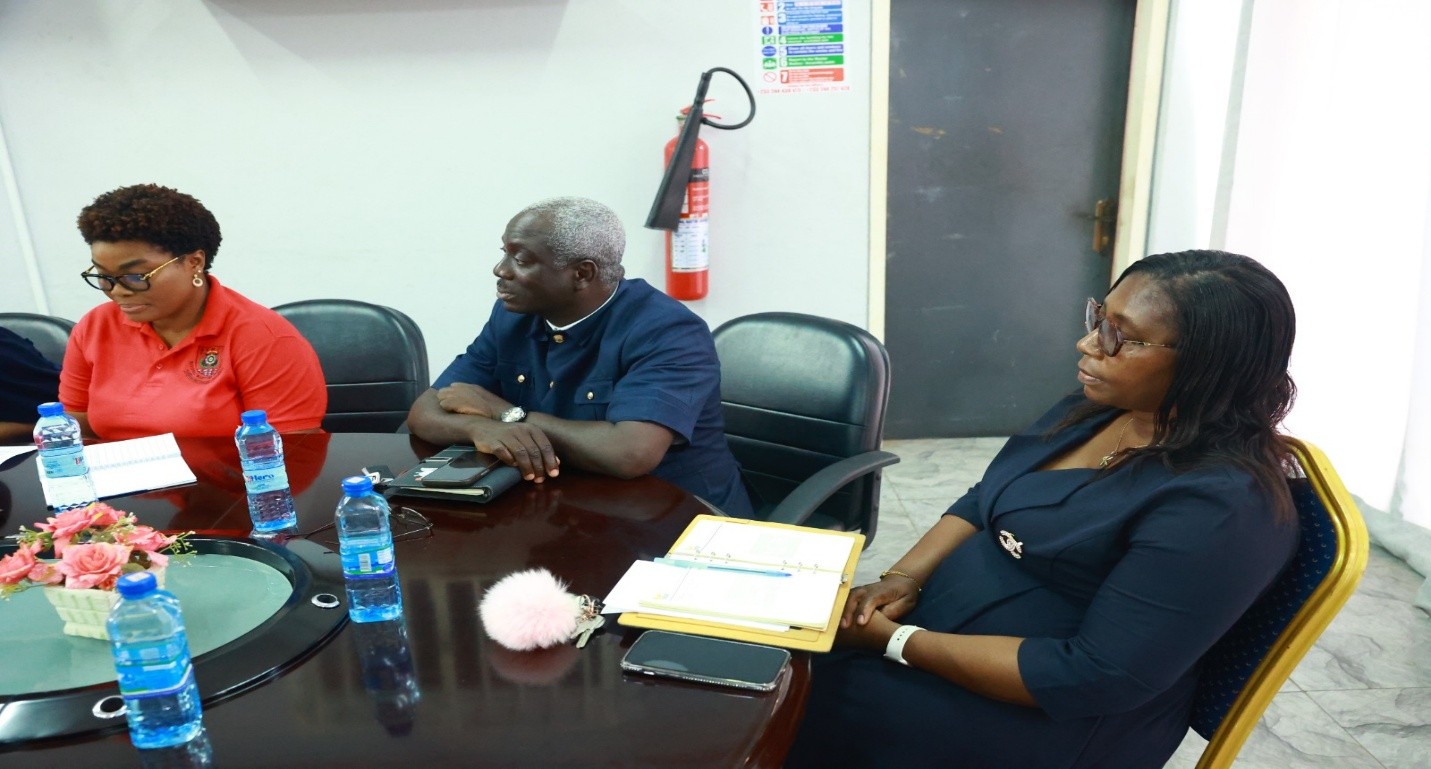
A section of the RMU delegation at the meeting
Dr Brooks therefore called for support in addressing the university’s growing accommodation needs, creating internship opportunities for students and engaging industry experts to deliver lectures and share practical knowledge with trainees.
He further highlighted the urgent need for a full-mission bridge simulator to enhance practical training and equip students with the competencies required to operate effectively in the modern maritime environment.
In his response, Mr Godfred disclosed that Maersk was currently reviewing its Corporate Social Responsibility (CSR) initiatives in Ghana, with particular attention to how the company could deepen its engagement with local communities and contribute meaningfully to societal development.
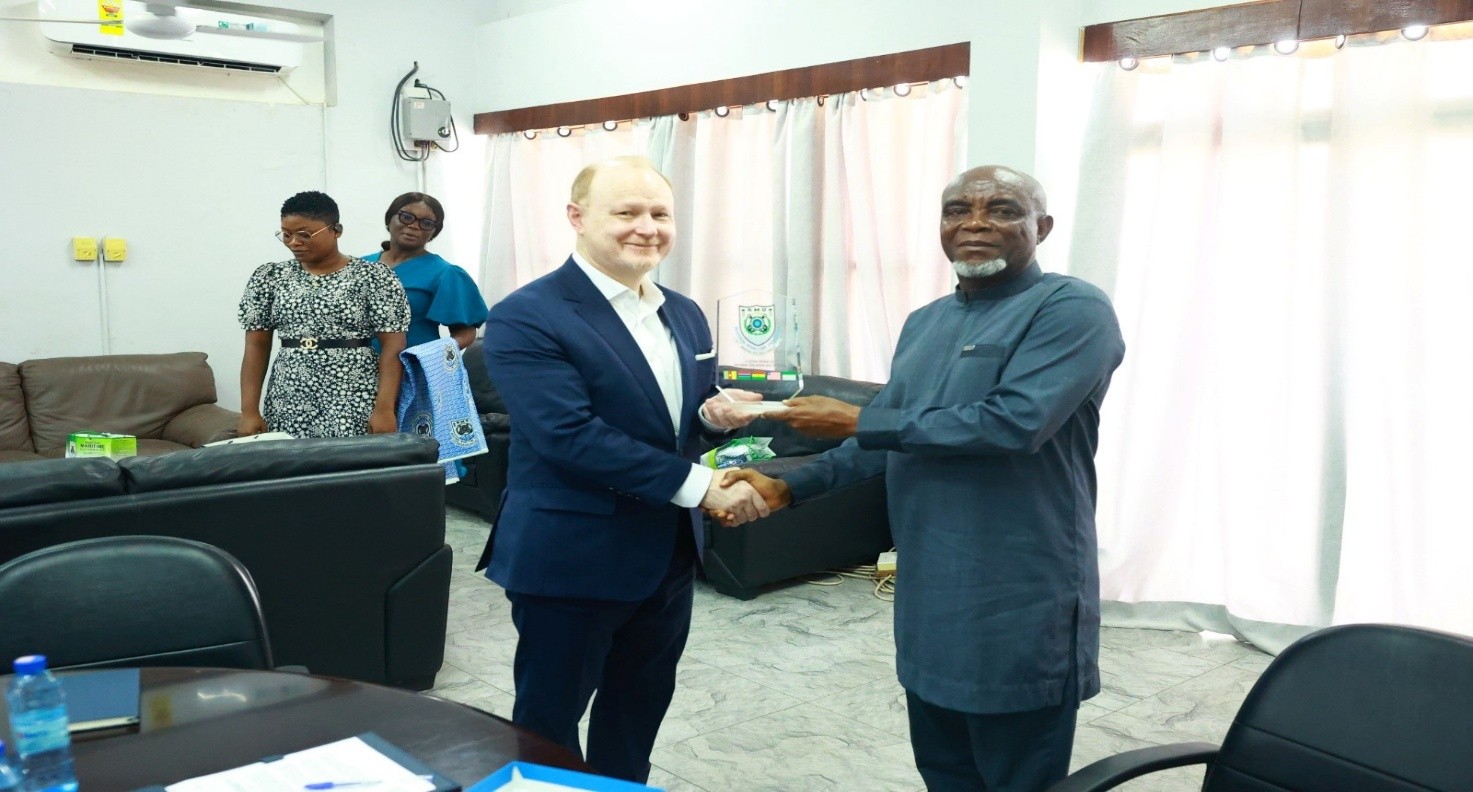
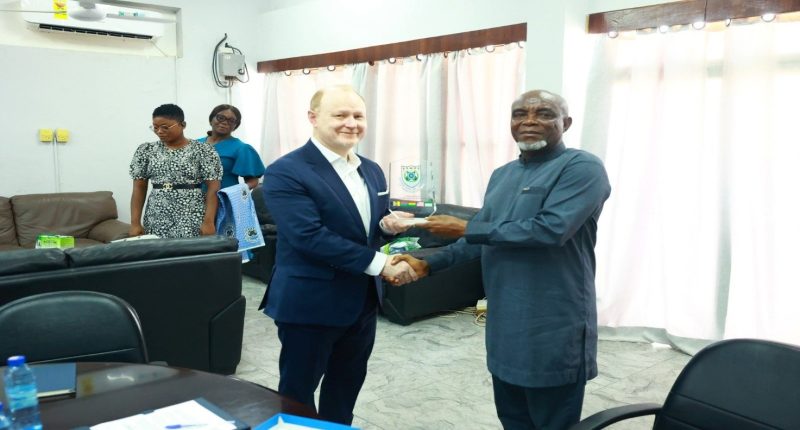
Mr Godfred (left) receiving a souvenir from the Ag. Vice Chancellor of the RMU
He indicated that institutions such as RMU, which are committed to developing young people and preparing them for the world of work, could be considered among the beneficiaries of the company’s CSR interventions.
According to him, investing in young people was a strategic decision, as they represented the next generation of professionals and potential leaders who could contribute to the growth of the company and the wider maritime industry.
Mr Godfred also expressed admiration for the quality of African cadets and their progression into leadership positions within the maritime sector, noting that several former cadets had risen through the ranks to become captains, second officers and other senior maritime professionals.
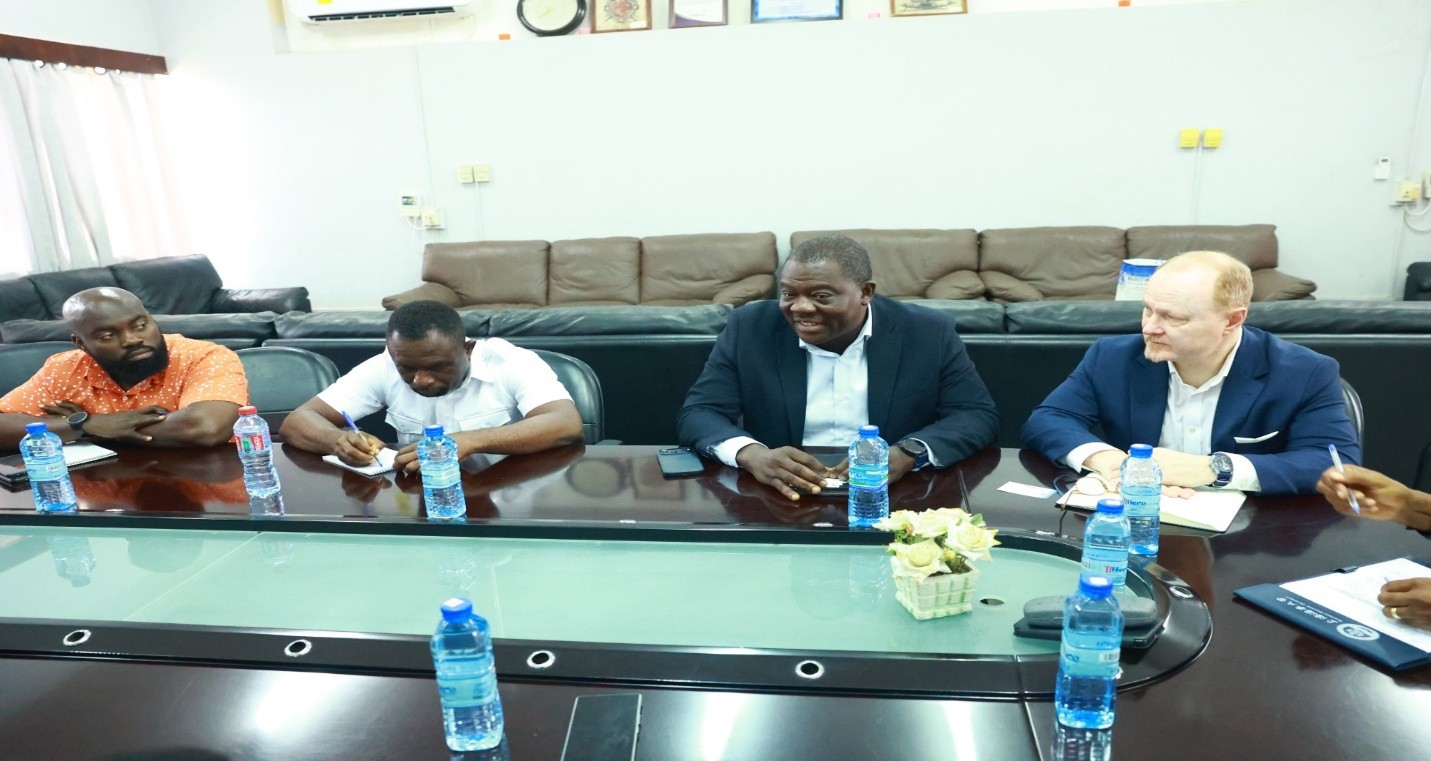
Maersk delegation with some RMU staff
He reaffirmed Maersk’s commitment to investing in seafarer development and indicated the possibility of supporting RMU’s requests through the company’s CSR framework. He further noted that the university could explore opportunities to benefit from Maersk’s training programmes, which cater to students and seafarers across Europe and other parts of the world.
Touching on the company’s global cadet development programme, Mr Godfred revealed that Maersk recruits approximately 450 cadets annually into its seafarer development pipeline. Although the programme was highly competitive, he identified it as another potential avenue through which RMU students could benefit.
He explained that the programme was designed to train young cadets and subsequently recruit qualified candidates into Maersk’s global seafaring workforce. He added that, given RMU’s accreditation standards and commitment to maritime training, there could be opportunities for suitably qualified cadets from the university to be considered for the programme.
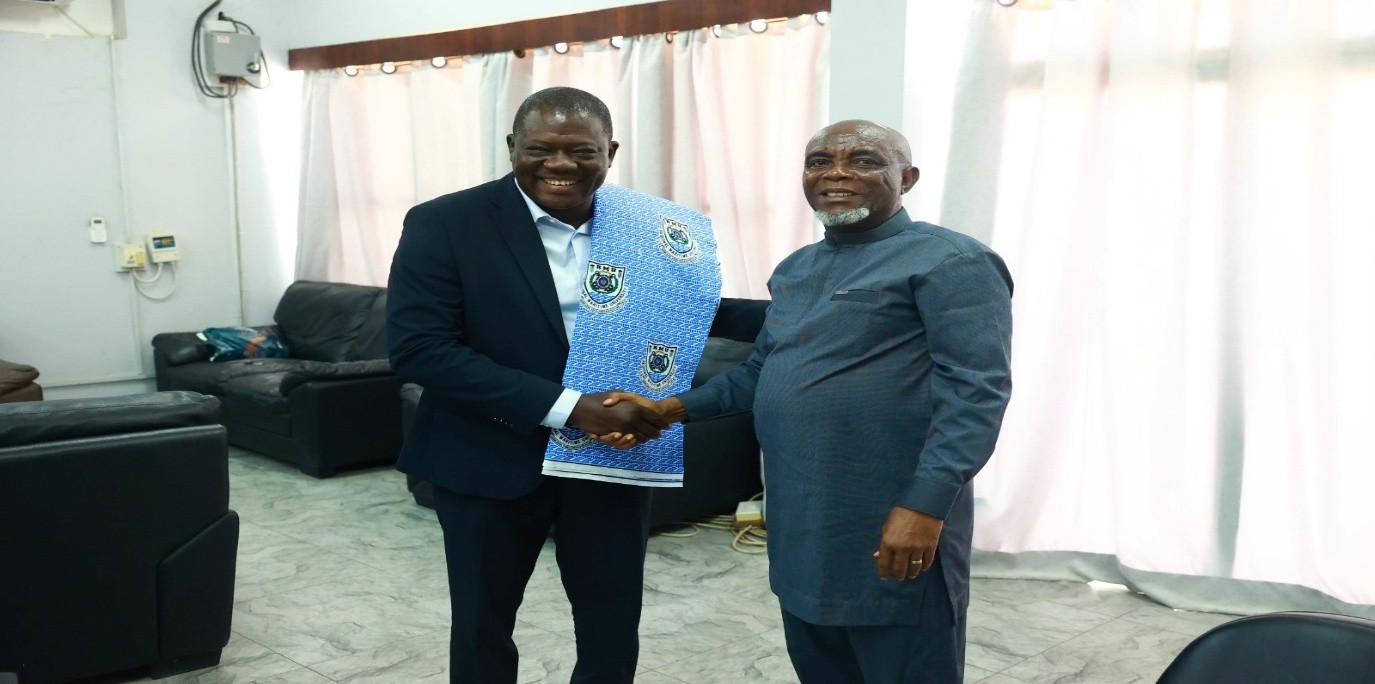
Dr Brooks with Mr Razak Ngula, Managing Director of Maersk Ghana Limited
The engagement forms part of RMU’s broader efforts to strengthen industry partnerships, mobilise institutional support and enhance the quality of maritime education and training in response to the changing needs of the global maritime industry.