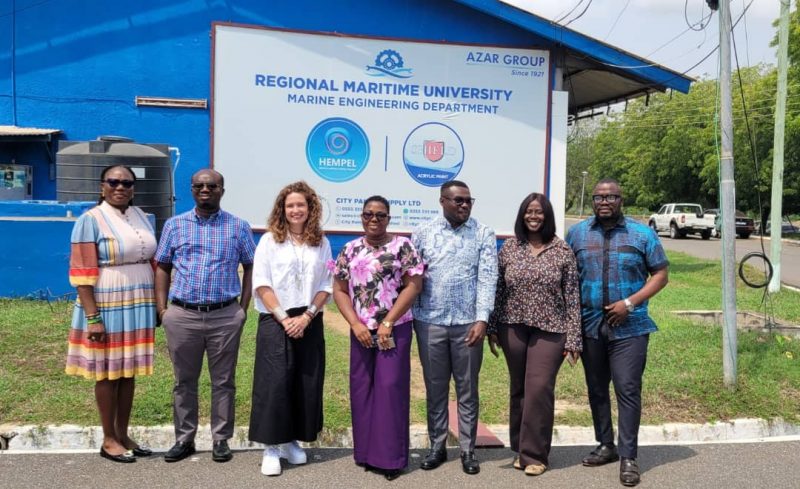

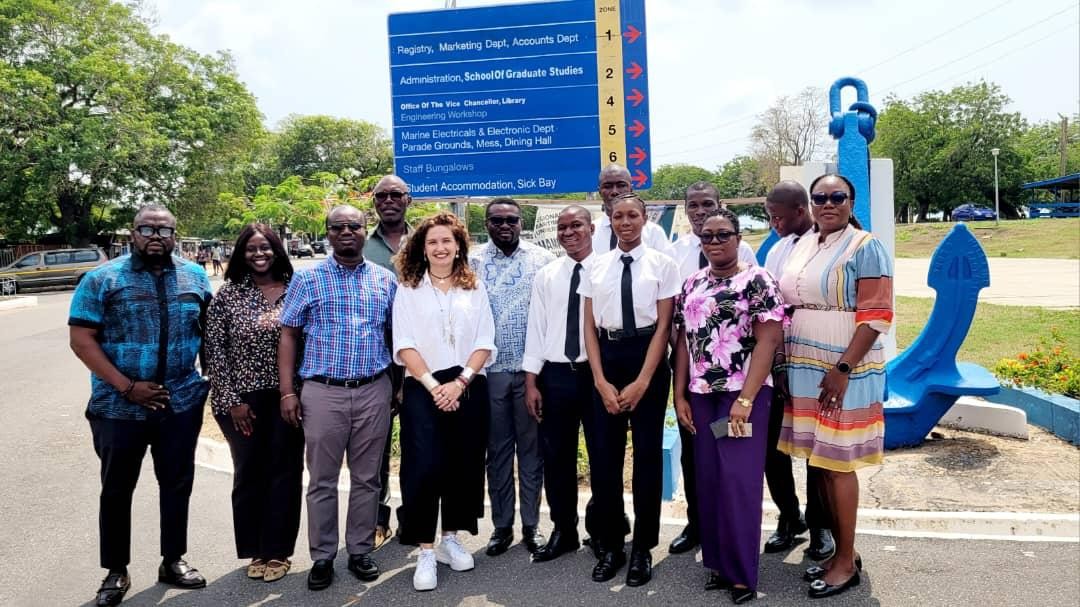
On Tuesday, February 17, 2026, the Regional Maritime University (RMU) received a delegation from Ocean Centres as part of the global initiative’s ongoing engagement with key maritime institutions. The working visit sought to deepen collaboration, exchange practical insights and identify strategic areas for growth within Ghana’s maritime sector.
a.
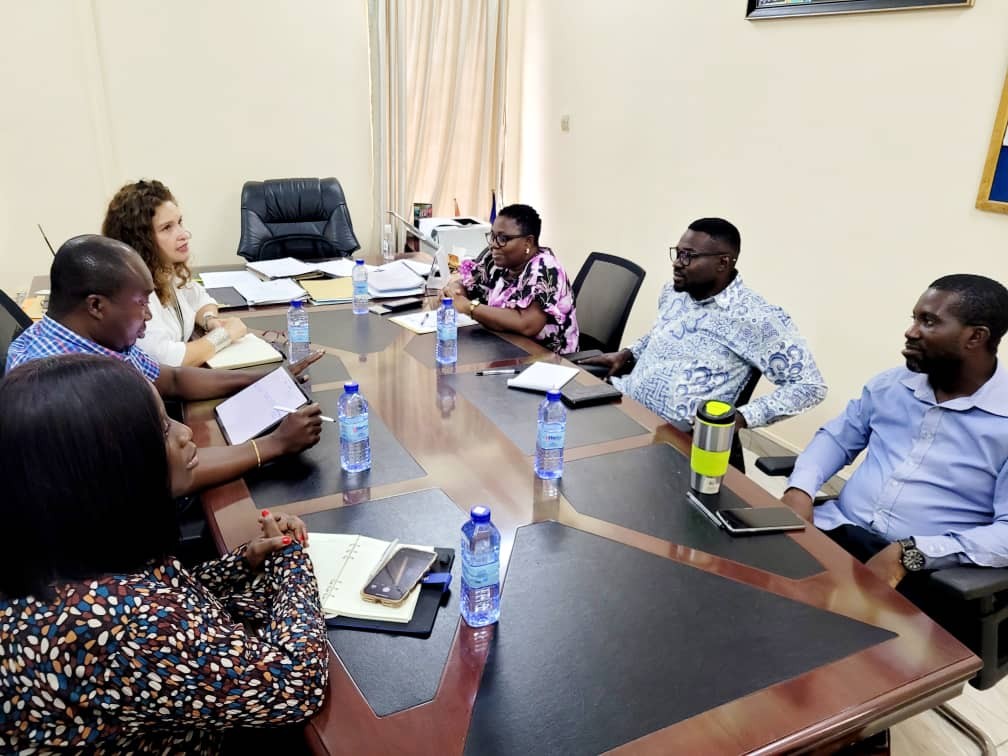
The Ocean Centres delegation comprised the Global Lead, Patricia Furtado de Mendonça, the Country Lead, Ocean Centres Ghana, Nana Boakye Boampong and the Communications and Administrative Assistant, UN Global Compact Network Ghana, Nana Yaa Agyekumhene.
The delegation was welcomed by the Provost, Dr. Denis Atehnjia Njumo, the University Librarian, Dr. Amy P. A. Asimah and the Head of the Marine Engineering Department, Dr. Isaac Animah.
In his remarks, the Provost reaffirmed RMU’s strong interest in advancing maritime safety and strengthening institutional collaboration.
He indicated that the University would consult relevant departments to compile a comprehensive report outlining priority areas for partnership. He further emphasized the importance of sustained engagement to ensure a mutually beneficial and enduring collaboration between RMU and Ocean Centres.
The Ocean Centres initiative, launched in 2025 by the United Nations Global Compact and the Lloyd’s Register Foundation, supports the development of sustainable and safe blue economies in the Global South, beginning with Ghana. The initiative functions as a collaborative platform bringing together government, industry, academia and civil society to enhance maritime safety, promote responsible fishing practices, protect marine ecosystems, advance renewable energy and strengthen workforce well-being.
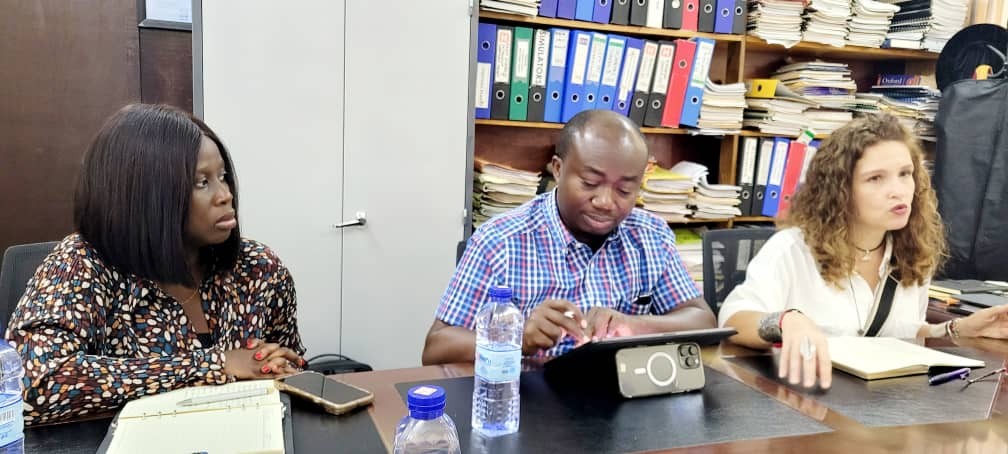
In her remarks, Patricia Furtado de Mendonça emphasised that Ocean Centres places primary focus on safety. While environmental concerns were interconnected, she noted that the core mandate centers on improving safety standards across maritime industries. She highlighted the availability of global networks and grant opportunities to support initiatives aligned with the Centre’s objectives.
She also underscored the importance of knowledge-sharing and inclusive stakeholder engagement, stressing that Ocean Centres prioritises listening to local actors and incorporating diverse perspectives to develop context-specific and sustainable solutions.
According to her, collaboration among universities, labour unions, governments and industry players was essential for developing effective policies and long-term interventions.
She also pointed to the need for maritime laws and policies to be updated in response to digitization, emerging technologies and evolving industry demands.
She reiterated that engagement with educational institutions such as RMU was critical to shaping future maritime safety initiatives and advancing sustainable blue economy development.
Providing an overview of RMU’s academic capacity, Dr. Isaac Animah outlined the structure of the University’s Marine Engineering programmes, including its BSc offerings, training processes, and the depth of expertise among faculty members.
He highlighted RMU’s initiatives in safety, environmental protection and de-carbonization, noting their significant contribution to maritime industry development.
He also drew attention to the encouraging rise in female participation in seafaring and marine engineering programmes, reflecting growing gender inclusivity within the sector.
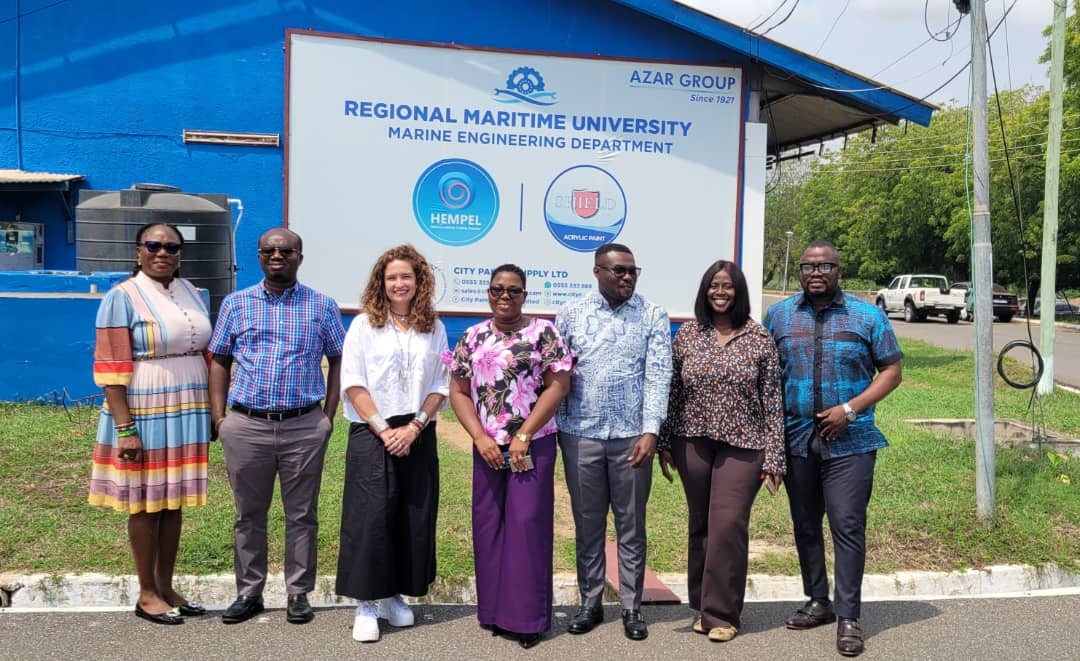
On her part, Dr. Amy P. A. Asimah expressed appreciation for the support received from the Ocean Centres towards grants provided by the Lloyd’s Register Foundation. She reaffirmed RMU’s readiness to serve as a knowledge partner and active network collaborator within the Ocean Centres framework. Emphasising the value of strategic partnerships, she noted that the University was prepared to engage progressively in grant opportunities and collaborative initiatives.
Nana Boakye Boampong, Country Lead, Ocean Centres Ghana, stated that given the evolving nature of maritime safety, coordinated stakeholder engagement was essential to align international initiatives with local realities.
He indicated that Ocean Centres was compiling a list of relevant academic and training programmes and looks forward to introducing training opportunities at RMU during the implementation phase.
He further noted that plans include engaging local seafarers to enhance their competitiveness in international labour markets, as well as incorporating RMU’s identified challenges and priority projects into the third phase implementation report.
Story By: PRO